There is not enough evidence about Isfahan's ancient history. But it's Fire Temple and Shahrestan Bridge's pillars date back to Sassanid era. In 1047 the Seljuks made Isfahan their capital and they adorned the city magnificently with geometrical style of architecture, some examples of which still remain.
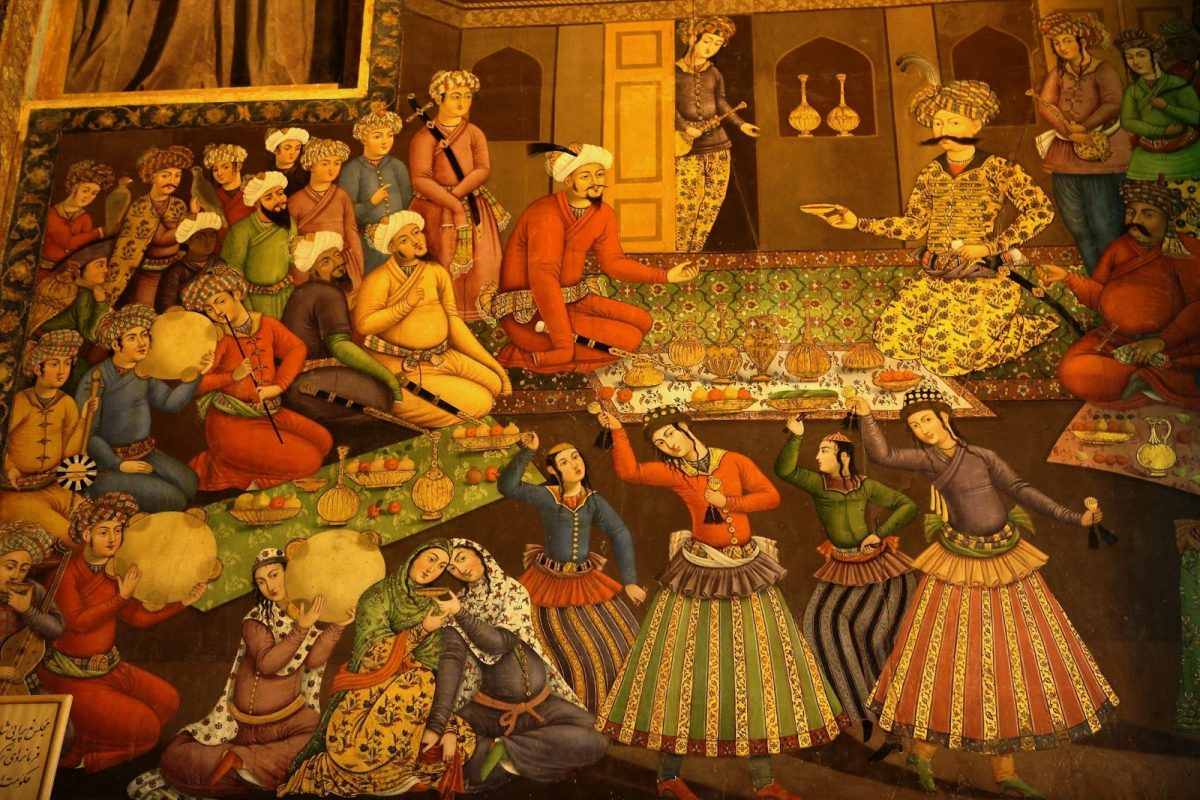
Shah Abbas I was the first Safavid ruler to make Isfahan his capital. His decision to move the capital from Qazvin to Isfahan in 1587 may have been motivated by the city's economic potential river; Zayandeh Roud that had a fertile plain and also by concerns for security, given its central location at a safe distance from troubled borderlands.
Isfahan had been the former capital of the great Seljuk Empire (1038-1194) which stretched from Central Asia to Syria. By selecting Isfahan as his royal seat, Shah Abbas I associated his rule with an illustrious dynasty of the past.
When restoring Seljuk buildings, Shah Abbas I left the Safavid mark in an unmistakable yet respectful manner. His renovation of the Great Friday Mosque, for instance, visually accentuated the features most associated with imperial authority using the brilliant colored tiles favored by Persian architects.
He demonstrated sensitive, if self-serving, reverence for Isfahan's glorious past and concern for its fitting display.
His heritages include the unique Naqshe-e Jahan Sq. and artistic advances in carpet weaving. Little more than a century after Shah Abbas death, the dynasty was finished and the capital first changed to Shiraz and finally to Tehran.
Although Isfahan was dominated by Islamic architecture, the city is also home to important Christian, Jewish and Zoroastrian sites. For example Church of Saint Joseph of Arimathea, built by an Armenian community that settled in Isfahan in the early 1600s.