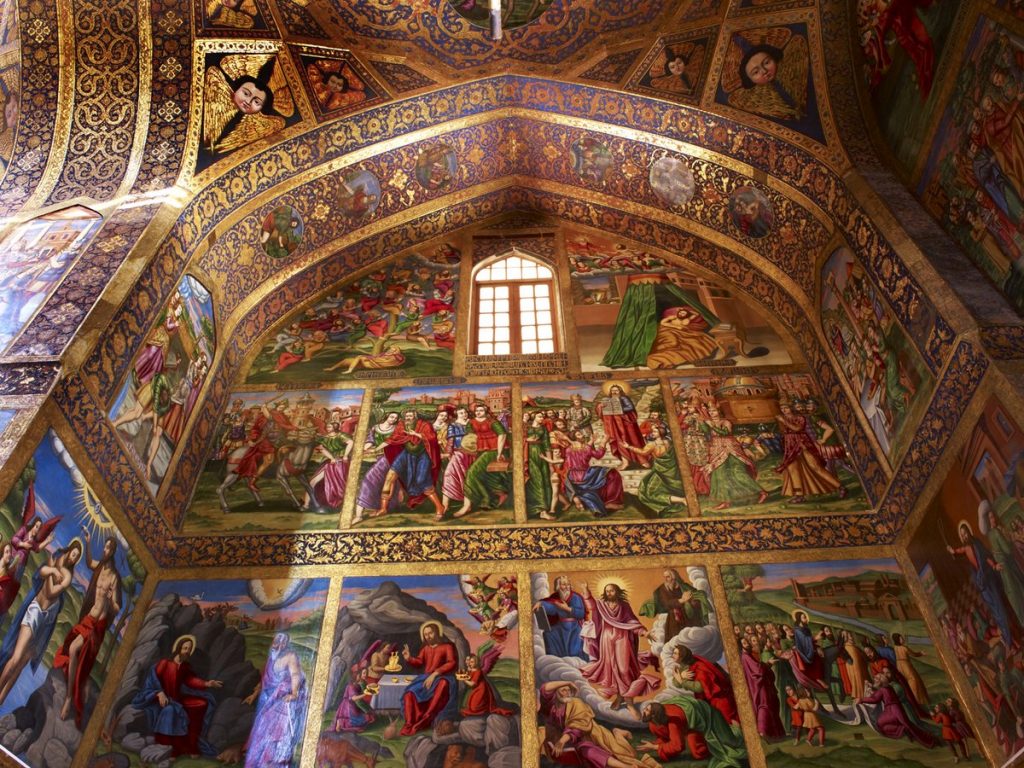
Jameh Mosque: (Allameh Majlesi St. 09:00-11:00 & 13:00-16:00) Great Jameh Mosque of Isfahan is a complex of buildings that centre on the 11th-century domed sanctuary. It includes a second smaller domed chamber which was built in 1088 and is known for its beauty of proportion and design.
The central sanctuary was built under the direction of Niẓām al-Mulk, vizier in the Seljuk era. It stands at the south end of the courtyard and its large brick dome is supported by 12 heavy piers.
The smaller dome stands at the north end of the courtyard. This single-shelled dome is known as a structural masterpiece that has survived centuries without damage.
Isfahan Jameh Mosque, framed by four huge iwans, or vaulted niches, includes structures built at various periods from the 11th century to the 18th. Among them were private chapels, a school, a library, and a treasury.
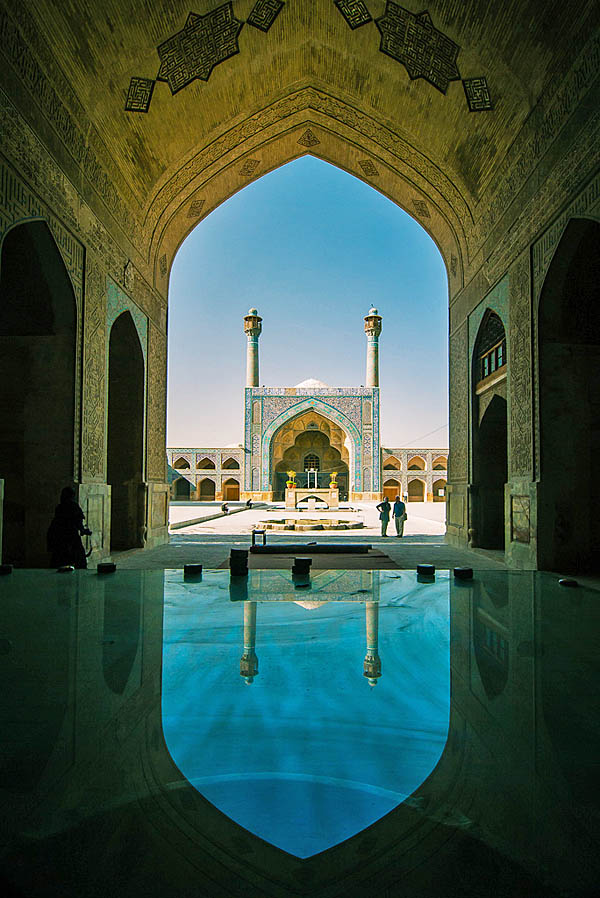
Jameh Mosque, Isfahan
Isfahan Great Bazaar: (09:00-20:00 Sat-Tue) It is one of most historic and fascinating bazaar of Iran. It links Naqsh-e Jahan Sq. with the Jameh Mosque (1.7 km northeast with many arched passageways topped by small domes.
Isfahan Bazaar is one of the oldest and longest roofed bazaars in the world from the Seljuk and Safavid era. It can be entered from one of its several entrances, which the main one is at end of Royal Square, higher up decorated with fine tile works and remarkable frescoes.
There are several traditional tea houses and restaurants. Wondering around in bazaar with its fragrant scents and spices is absolutely a real treat.
Naqsh-e Jahan Sq: It is a public urban square in the centre of Isfahan, the meaning is design of the world and the other name is Imam Sq. Naqsh-e Jahan Sq. is one of the largest city squares in the world and an outstanding example of Persian and Islamic architecture which registered as UNESCO's World Heritage Sites.
Built by the Safavid Shah Abbas I in the early 17th century, the square is bordered by two-storey arcades and anchored on each side by four magnificent buildings: to the east, the Sheikh Lotfallah Mosque; to the west, the pavilion of Ali Qapu; to the north, the portico of Qeyssariyeh; and to the south, the celebrated Royal Mosque.
A homogenous urban ensemble built according to a unique, coherent, and harmonious plan, the Naqsh-e Jahan Sq. was the heart of the Safavid capital.
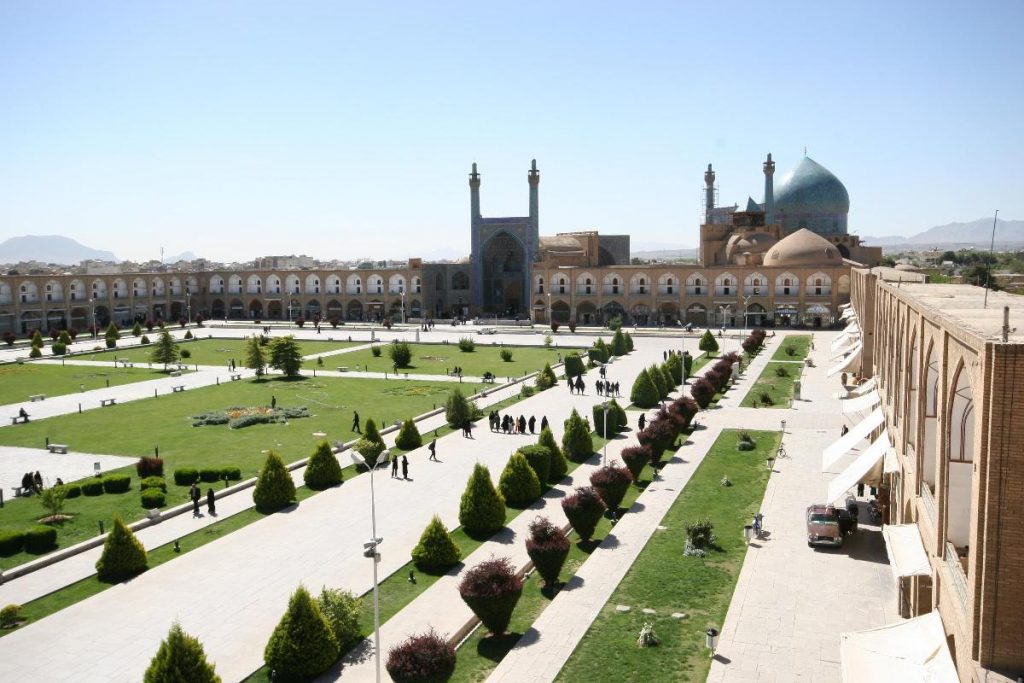
Naqsh-e Jahan Square, Isfahan
Imam Mosque: (09:00-16:00 winter, 09:12:30 & 15:00-18:30 summer, closed 09:00-13:00 Fri) At the end of the Imam Sq. It is one of the everlasting masterpieces of architecture in Iran. It is registered, along with the Naghsh-e Jahan Sq., as a UNESCO World Heritage Site. The construction began in 1611, and its splendor is mainly due to the beauty of its seven-color mosaic tiles and calligraphic inscriptions. The decoration inside the dome is remarkably elegant and repeats with subtle variation the blue, white and gold shads seen outsides.
The mosque is one of the treasures featured on Around the World in 80 Treasures presented by the architecture historian Dan Cruickshank.
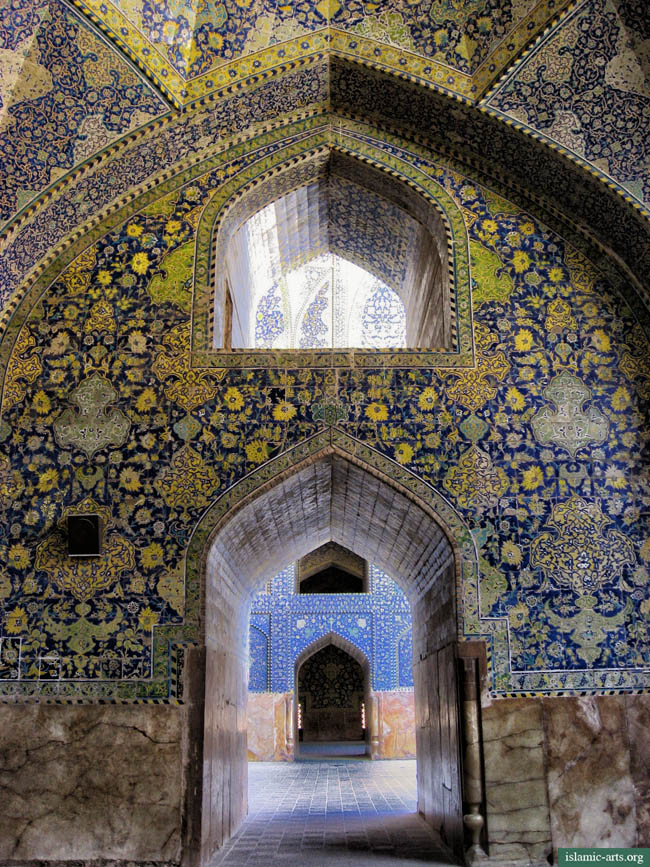
Imam Mosque, Isfahan
Sheikh Lotfollah Mosque: (09:00-16:00 winter, 09:00-12:30 & 15:00-18:30 summer) It was built between 1602 and 1619 during Shah Abbas I and dedicated to his father in law, Sheikh Lotfollah.
Sheikh Lotfollah Mosque is a shimmering mosque with amazing ceramic work, where pale tiles on the dome change color from cream to pink, depending on the light conditions. Its main difference to other mosques is absence of minaret or courtyard. This was probably because the mosque was not considered for public use, but rather served as the worship palace for women of Shah.
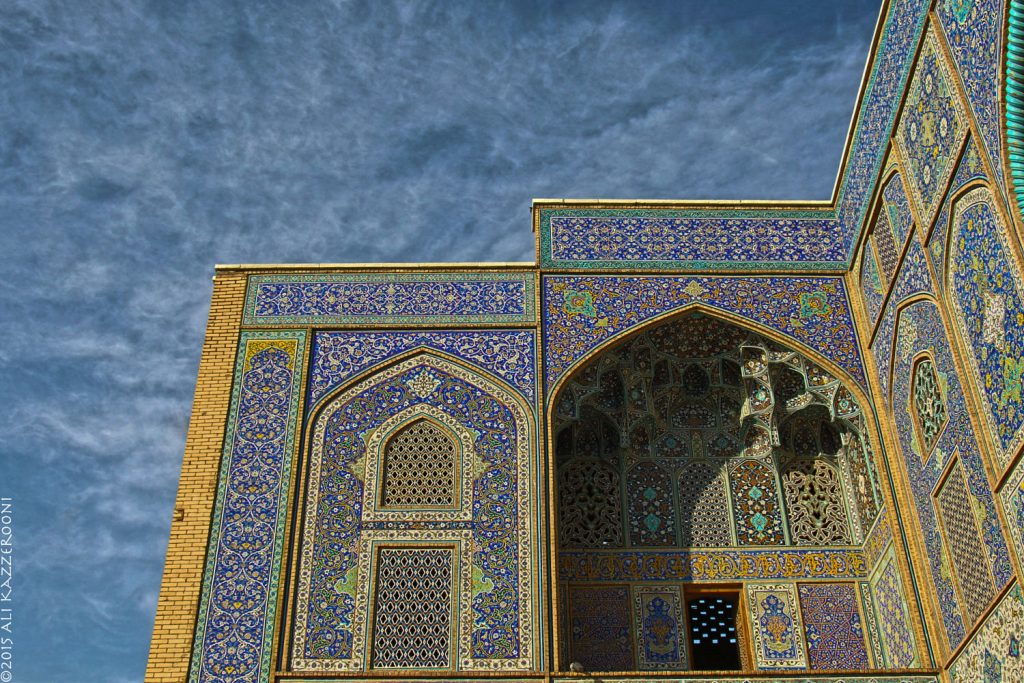
Sheikh Lotfollah Mosque, Isfahan
Ali Qapu Palace: (09:00-16:00 winter, 09:00-12:30 & 15:00-18:30 summer)
The late 16th-century residence of Shah Abbas, with six-stored palace was a monumental gateway to the royal palaces that lay in the parkland beyond.
The palace stands on the west side of the Naqsh-e Jahan Square. The most important characteristic of Ali Qapu Palace is its elevated terrace, which featured 18 slender columns. The terrace affords a magnificent view over the Square and Imam Mosque.
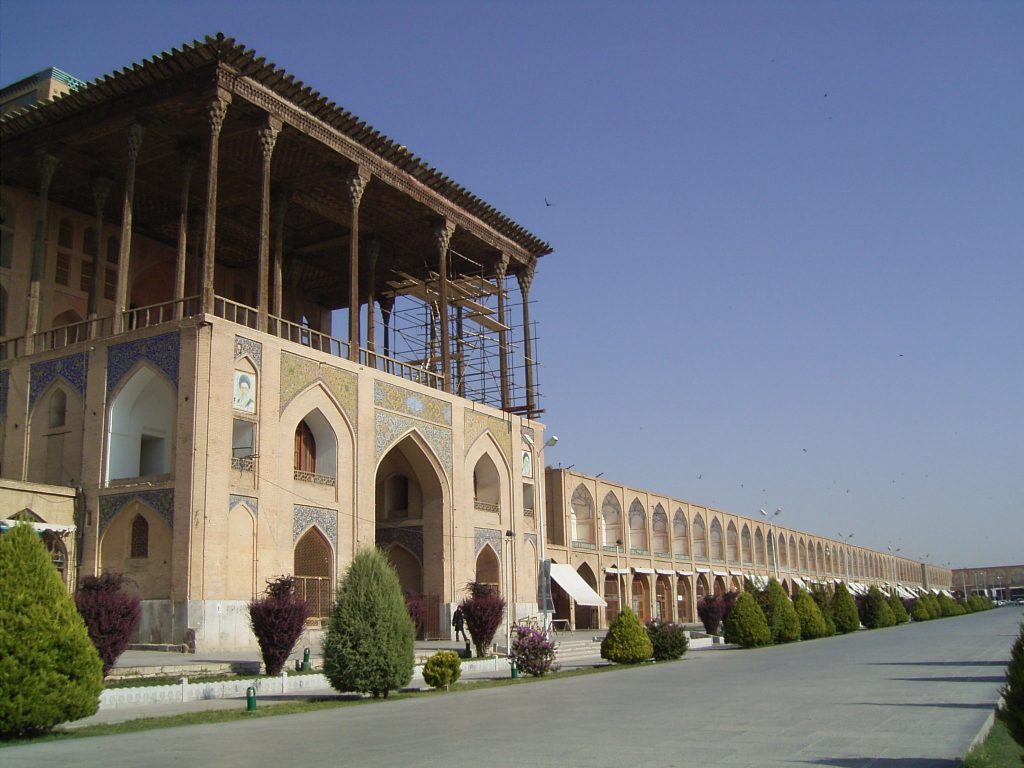
Ali Qapu Palace, Isfahan
Hasht Behest Palace: (09:00-16:00 winter, 09:00-12:30 & 15:00-18:30 summer) Hasht Behesht which means Eight Paradises was once the most luxuriously decorated secular building in Isfahan. The octagonal building with large central domed hall and a series of small chamber and wooden columns; have a seductive tranquility.
Si-o-seh Bridge: The length of this bridge is 298 m and was built by Allahverdi Khan, one of best generals of Safavid era between 1599 and 1602. It was used as both bridge and dam. There are some tea houses available at either end of the bridge.
Jolfa: The Armenian Quarter: It dates back to Shah Abbas I, who transported a colony of Christians from the town of Jolfa (now on Iran’s northern border) entierly, and named the village as New Jolfa.
Shah Abbas support Armenian society and ensured that their religious freedom was respected, although they were living in Islamic city. At one time over 42,000 Armenian Christians lived here. It's worth visiting The Armenian Quarter especially in the afternoon and seeing the sights.
Vank Cathedral: (08:00-noon & 14:30-17:30, to 18:30 summer, close Friday morning and holidays) A Christian cathedral with lavish interior, which was built between 1648 and 1655. Vank Cathedral is a focal point and the main historical Armenian architecture in Iran with richly decorated interior. The wall and ceiling is covered with magnificent Christian imagery, fine painting and tile works.