End-to-End Bazaar:
Known as one of the oldest trading centers in Iran, Kerman Grand Bazaar is stretched for 1200m from Tohid Sq. northeast to Shohada Sq. It is made up of four smaller bazaars and has about 20 branch of to the north and south, which compared to other Iranian bazaars, has diverse architecture and a unique combination of different art in different periods.
Exterior moldings on the ceiling are related to 350 or 400 years ago. Amazing oil paintings can be observed everywhere in the ceiling, where best time to visit is in the morning and late afternoon.
The herb shops area and the open air fruit market of Kerman Bazaar are worth visiting.
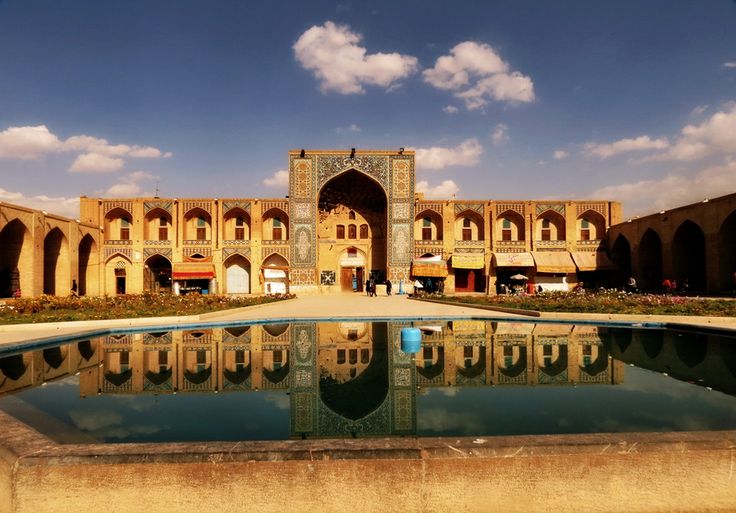
Jame Mosque: (Off Shohada Sq.) The Friday mosque of Kerman was built in 1350 in the Muzaffarids era and is the earliest surviving example of Muzaffarid architecture. Jameh Mosque of Kerman has 4 lofty iwans and sparkle blue tiles date from 1349 but were extensively modernized during Safavid era and later on. The interesting point about Kerman Jameh Mosque is absence of minaret. Instead there is a squat clock tower atop the main entrance, located on Shohada Sq.
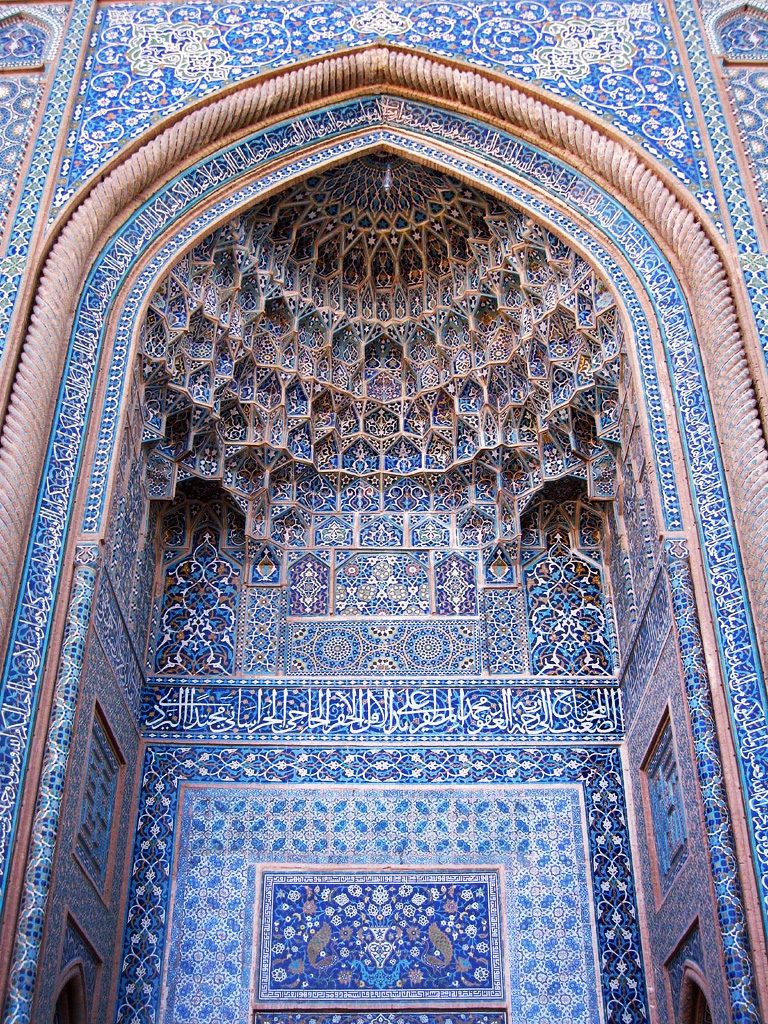
Jameh Mosque, Kerman
Imam Mosque: (Imam Khomeini St.) If you are interested in the process of rehabilitating old buildings and comparing the differences, then Kerman's Imam Mosque is a good place. Dating back to early Islamic period, restoration work has revealed the remains of an old fine mihrab belived to date from the early Islamic period. Also on the roof of the mosque there are a series of three unusual mihrab-style alcoves that their origin is now known yet.
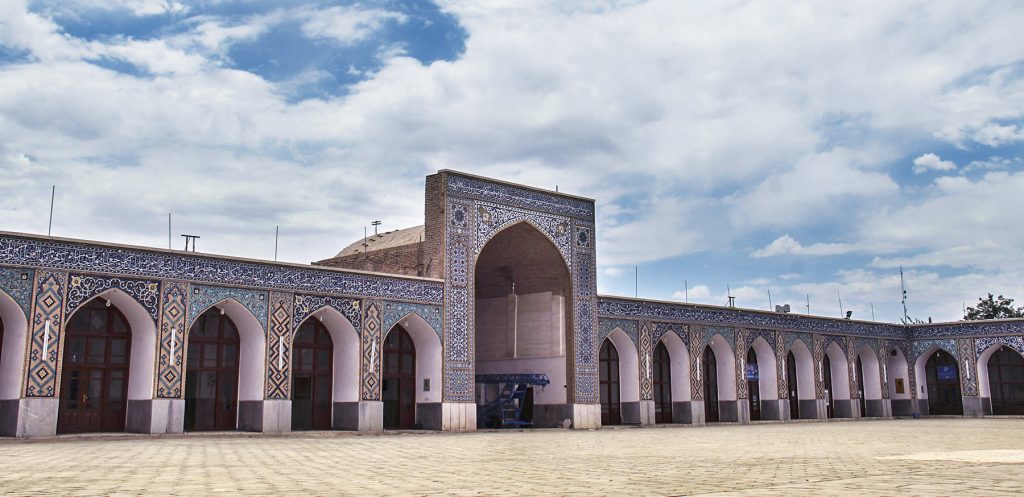
Imam Mosque, Kerman
Kerman National Library: (07:00-21:00 Sat-Wed, to 20:00 Thu, closed Fri) It is the greatest informatics research center in Iran, but for non-Farsi speakers it's a forest of columns supporting vaulted ceilings. A attraction worth visiting for its beautiful architecture.
Kerman National Library was built in 1929 with a harmonious variation on late-Qajar era.
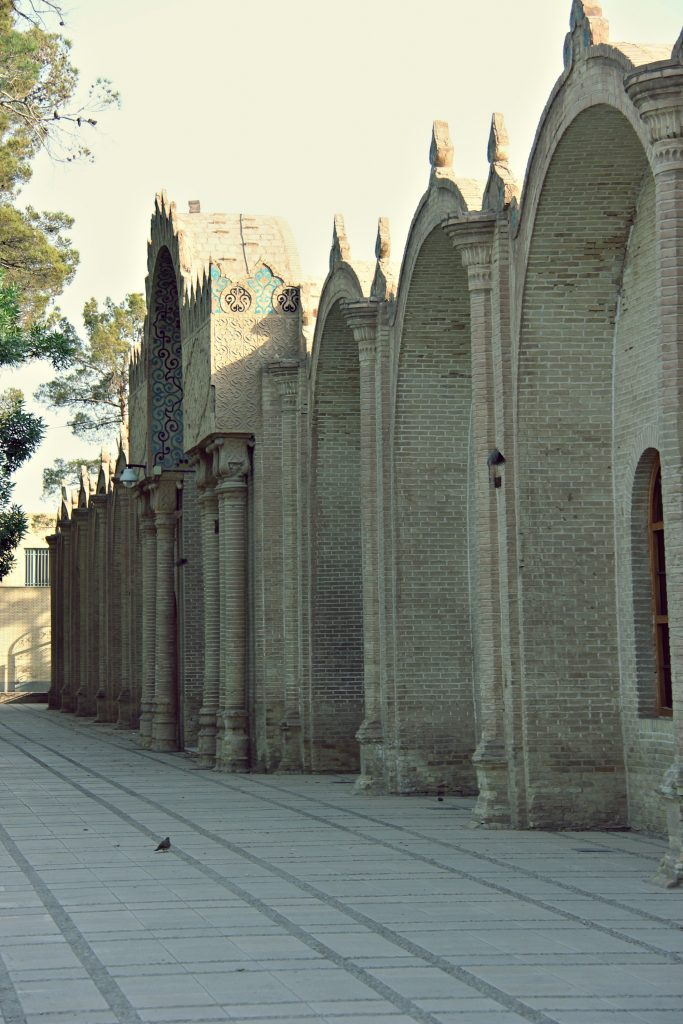
National Library, Kerman, by Razie Khezri
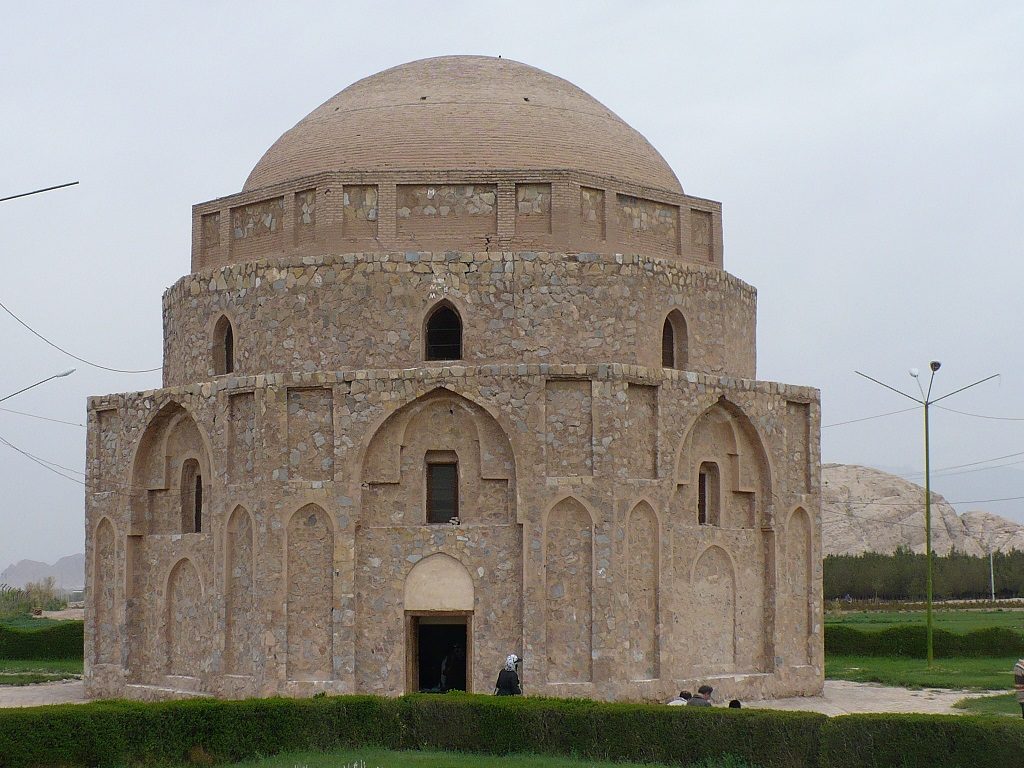
Gonbad-e Jabaliye: (24 hr) Gonbad-e Jabalie which means mountain of stones is an octagonal and very old structure located at the edge of the city. The real function of the structure is not known, some believe it has been an observatory, and others think it was a tomb. No matter what the function was, the structure is remarkable because it is constructed of stone rather than the usual brick. However, the double-layer dome, added 150 years ago, is made from brick.
Today, it is a museum of a number of other historical inscribed pieces.